Est. 1902 · Kalamazoo, Michigan

The Gibson Files

Orville Gibson started by building mandolins in a one-room shop. A hundred and twenty years later his name is on the guitar that invented rock and roll. This page is my love letter to them.

How it happened

From a Kalamazoo workbench to the most recognizable headstock in the world.

1902

Orville Gibson goes into business

After years of carving mandolins with violin-style arched tops, Orville H. Gibson incorporates in Kalamazoo. That arched-top idea becomes the company's whole DNA.

1936

The ES-150 and the electric guitar

A hollowbody with a bar pickup, and soon Charlie Christian is soloing on one in Benny Goodman's band. For a decade, "electric guitar" essentially means this Gibson.

1944

Chicago Musical Instrument takes over

CMI buys the company and moves it toward a mass market. A young gadget inventor named Ted McCarty is put in charge of design.

1952

The Les Paul

McCarty and Les Paul himself build a solidbody with humbuckers, a glued-in neck and a gold finish. It is heavy, expensive, and immediately adopted by people who want to sustain a note forever.

1958

The Burst — and the flying ones

Les Paul Standards get a sunburst finish over flame maple. Same year: the radical Flying V and Explorer. Only a few hundred of each are made; all are now museum pieces.

1961

The SG replaces the single-cut

A thinner, double-cutaway body with horns and full fret access. It becomes the AC/DC and Black Sabbath guitar — and gets called "the Devil's guitar" for its horns.

1969

The Norlin years

Corporate ownership brings cost-cutting, pancakes, and a decade guitarists still argue about. Prices drop; mystique survives.

1986

Back in private hands

Henry Juszkiewicz and partners buy Gibson and bring back the Historic program — painstaking reissues of the '59 Burst. Collectors breathe again.

2019

A guitar company again

After a bankruptcy and a failed consumer-electronics push, new ownership sells off the lifestyle brands and goes back to basics: building guitars well.

What makes a Gibson a Gibson

The recipe they've stuck with for seventy years, for better and occasionally worse.

24.75"
Scale length — shorter, slinkier, easier to bend
Set neck
Glued in, not bolted — the sustain argument
Humbuckers
Two coils, no hum, thick mids
Mahogany
Body and neck, maple cap on the upper models

The models that matter

Six shapes, one family tree. Every one still in the catalogue.

1952 · Solid body

Les Paul

Goldtop → Burst
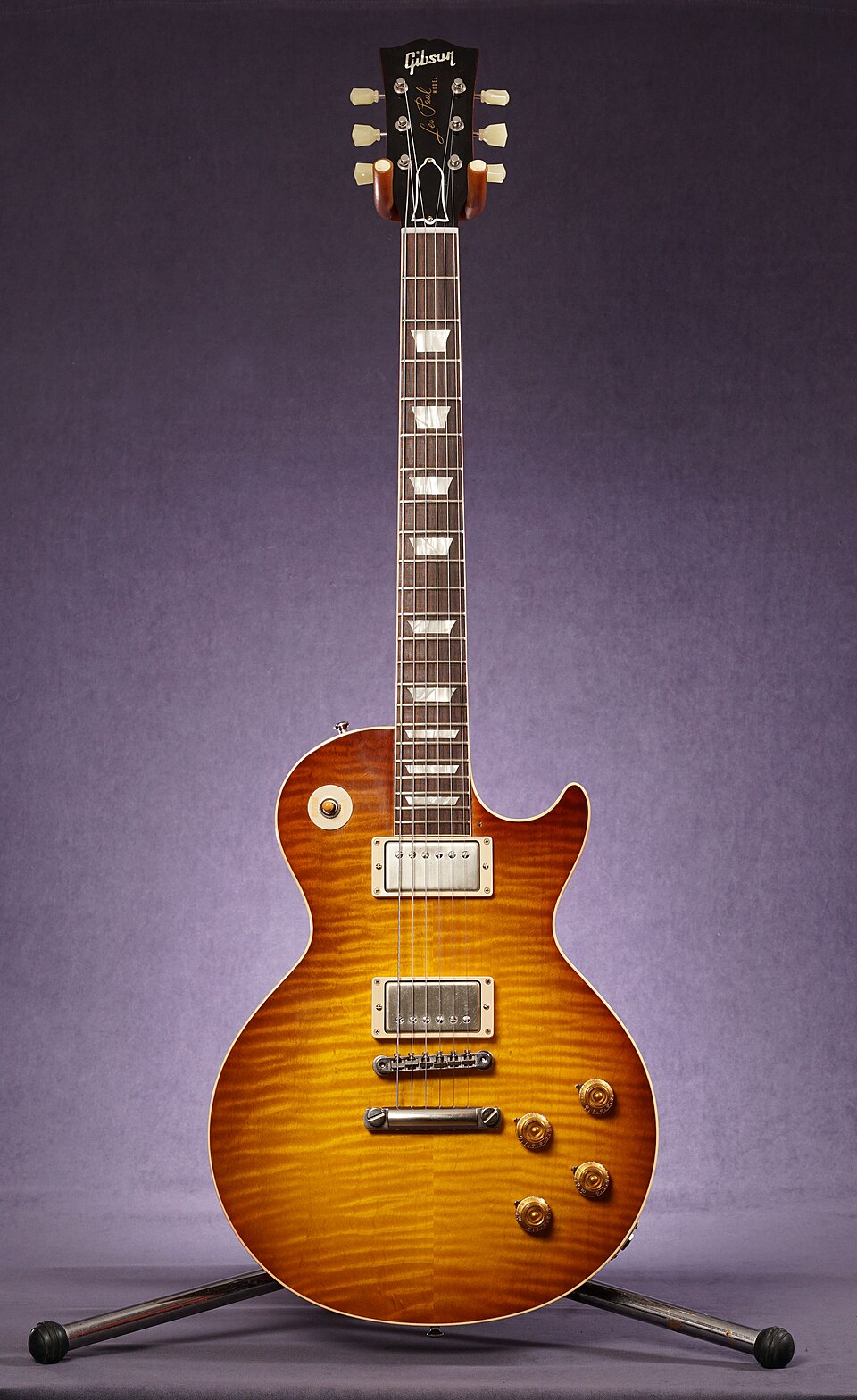
Gibson Les Paul R9 with flame maple top

Single cutaway, two humbuckers, and a weight that reminds you it's real. Slash, Page, Allman, Green — the default choice when a song needs to sound expensive.

1961 · Solid body

SG

Originally sold as a Les Paul
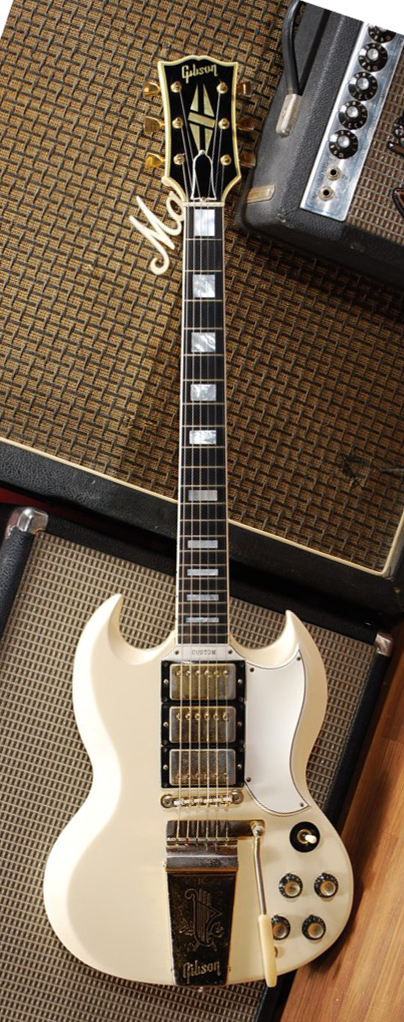
Gibson SG with twin horns

Two horns, all the fret access, and a neck that hangs away from the body. Angus Young, Tony Iommi, Sister Rosetta Tharpe. Bright, snarly, loud.

1958 · Semi-hollow

ES-335

The first thinline semi
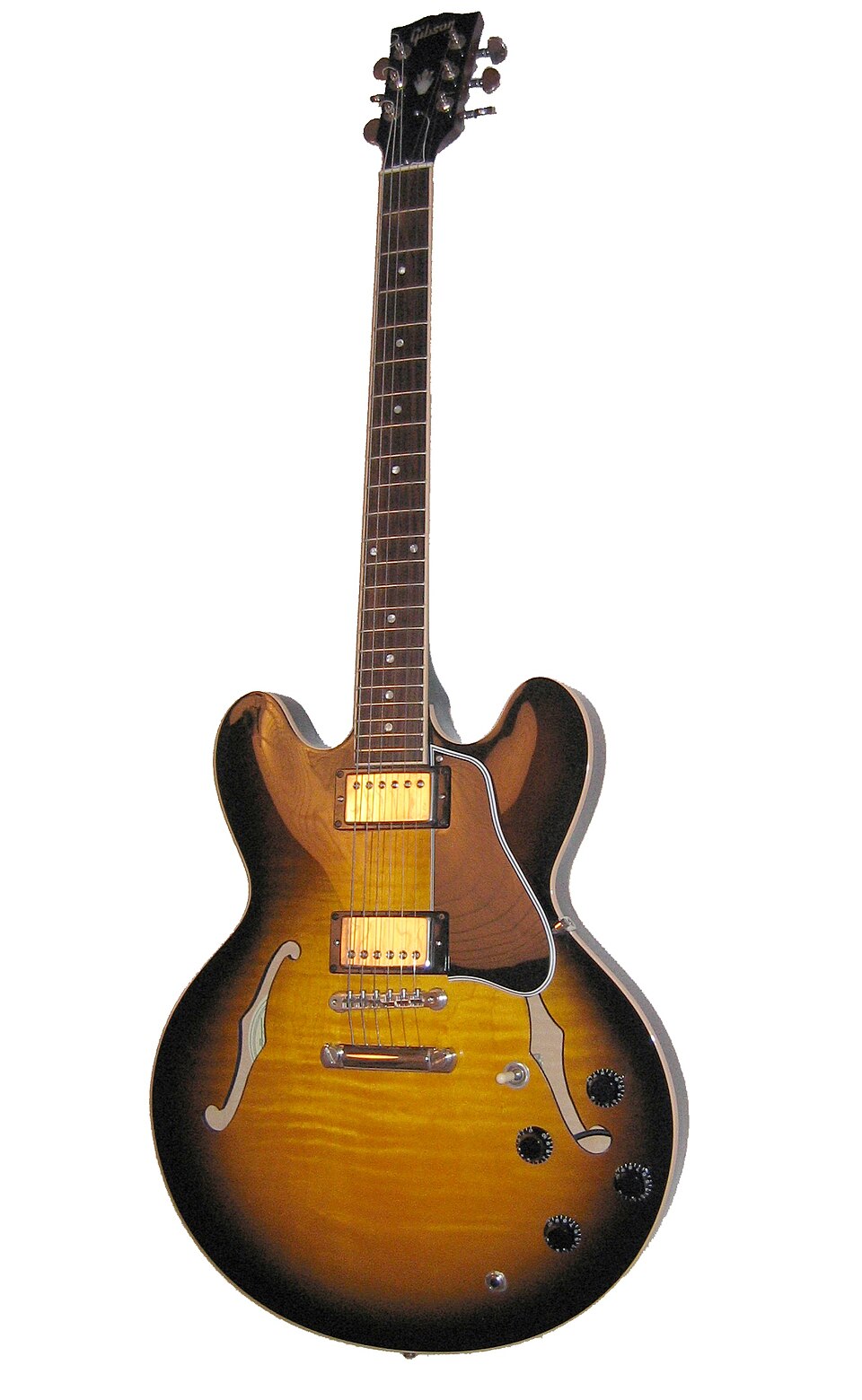
Gibson ES-335 semi-hollow electric guitar

A maple block down the middle of a hollow body — feedback under control, air in the tone. B.B. King's "Lucille" lived in this family. Jazz to blues-rock at 2am.

1958 · Futuristic

Flying V

Space-age, then forgotten, then worshipped
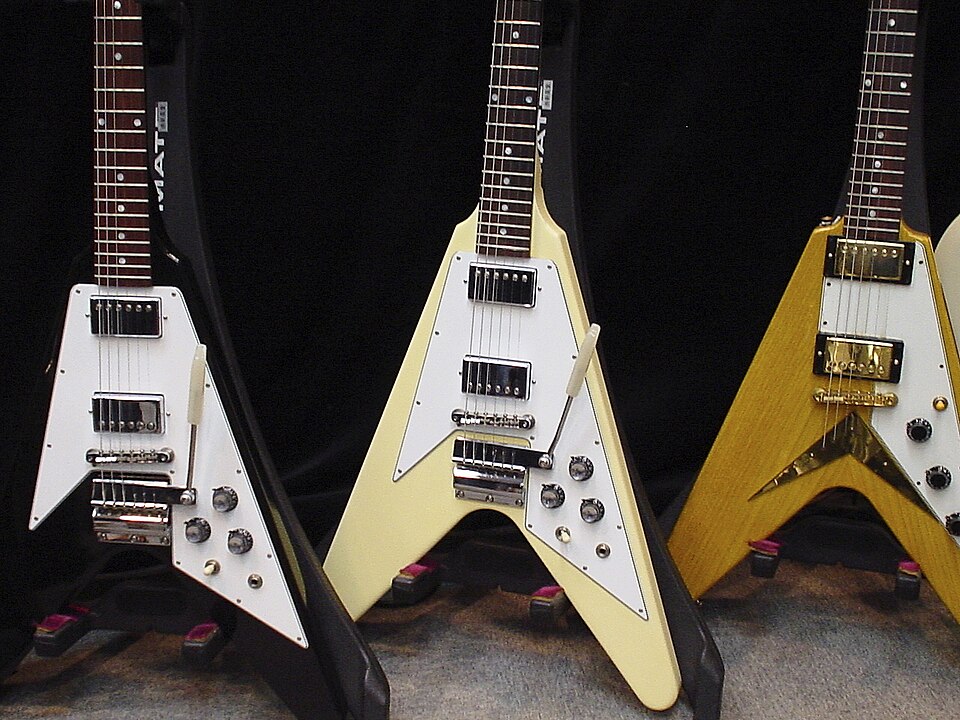
Gibson Flying V

Designed for the jet age and discontinued almost immediately. Albert King made it sing, then a generation of metal players made it a statement.

1958 · Futuristic

Explorer

The pointy one that started points
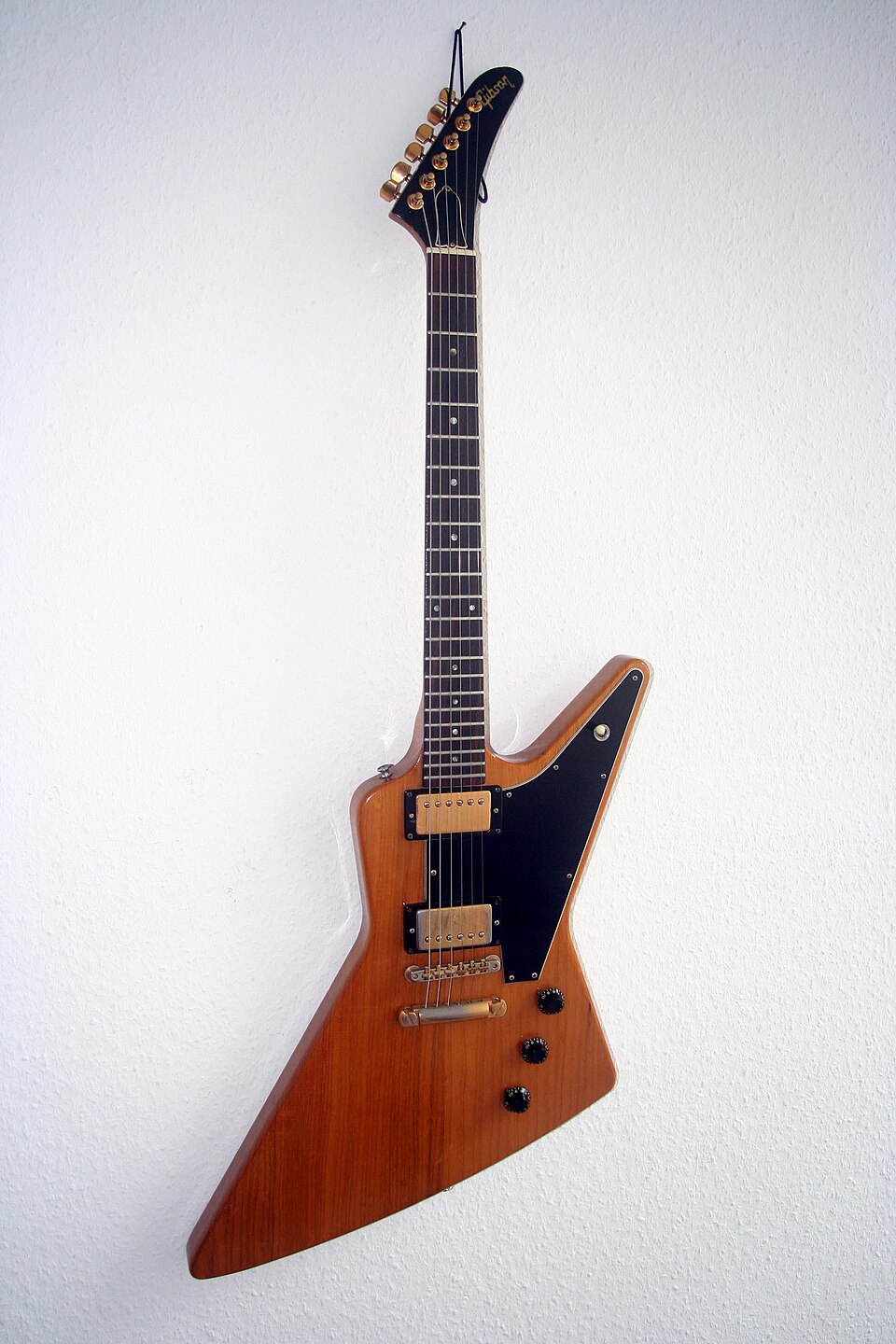
Gibson Explorer

Angular, off-balance, and utterly distinctive. The Edge, James Hetfield, Allen Collins. Proof that Gibson could out-weird Fender any day it chose to.

1960 · Acoustic

Hummingbird

Square shoulder dreadnought
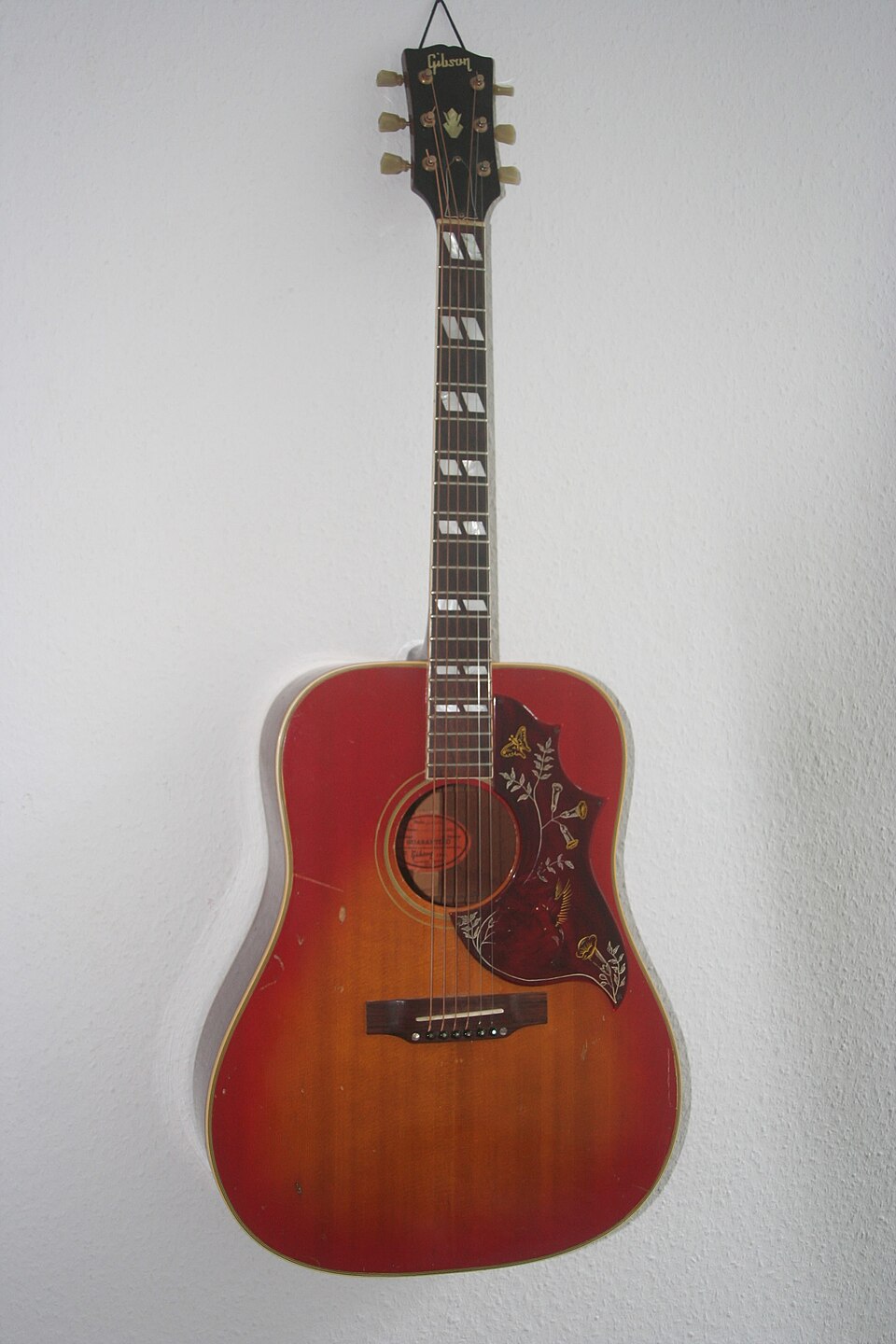
Gibson Hummingbird acoustic guitar

Rosewood bridge, a pickguard with a bird flying across it, and a warm, mid-forward voice. Keith Richards and Gram Parsons both knew what it was for.

The Les Paul didn't just add a guitar to the rack. It added a whole other sound — thick, singing, and impossible to ignore.
— the reason half of every record you own sounds the way it does

Who played them

A short, biased list. Every one a Gibson person first.

B.B. King · Lucille, ES-355
Jimmy Page · '59 Burst
Slash · '59 replica, Appetite
Duane Allman · '59 Burst, Hot 'Lanta
Angus Young · SG Standard
Tony Iommi · SG, the original doom
Charlie Christian · ES-150
Sister Rosetta Tharpe · SG Custom
Albert King · Flying V, upside down
Bob Marley · Les Paul Special
Keith Richards · Hummingbird & ES
The Edge · Explorer
Chuck Berry · ES-350T
Les Paul · obviously